Craft is the infrastructure under registered teacher apprenticeships and grow-your-own programs: braided funding, competency and clinical-hour tracking, and the reporting your state and accreditor accept. Bring your own academic partner or use WGU's School of Education. Built for districts, community colleges, teacher preparation programs, and the state agencies that fund them.
Out-of-town hires leave faster. Vacancies in SPED, STEM, elementary, bilingual, and CTE compound year over year. Long-term subs eat budget and instructional capacity. The retention math is brutal in any district, and it compounds fastest where the pipeline is thinnest.
The candidates are already there — paraprofessionals, classified staff, community members who know the kids by name, and students already enrolled in a prep program. What's missing is the infrastructure to credential them locally, fund the pathway, document competencies, and report on outcomes the state, your accreditor, and your funders need.
A no- or low-cost grow-your-own offer for any district, college, or prep program that can't recruit its way out of the shortage. Built once, run anywhere. Four pieces, packaged together — the academic and credentialing side is solved on day one, with your partner or ours.
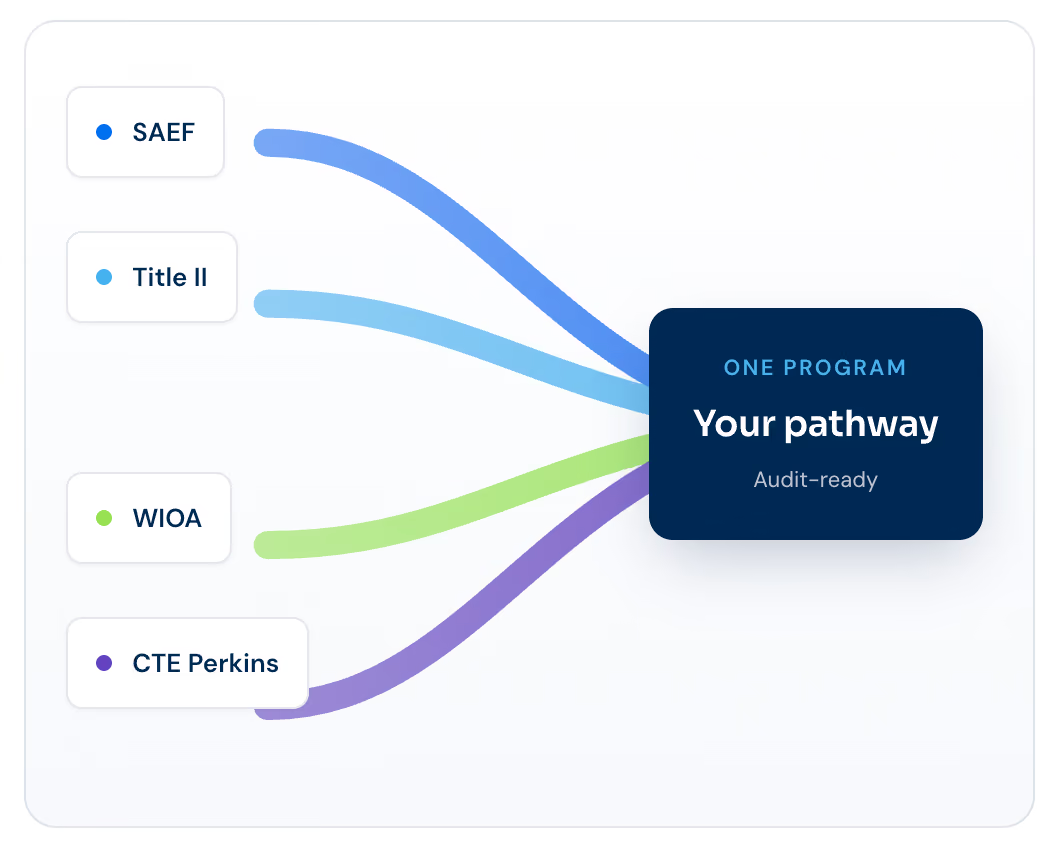
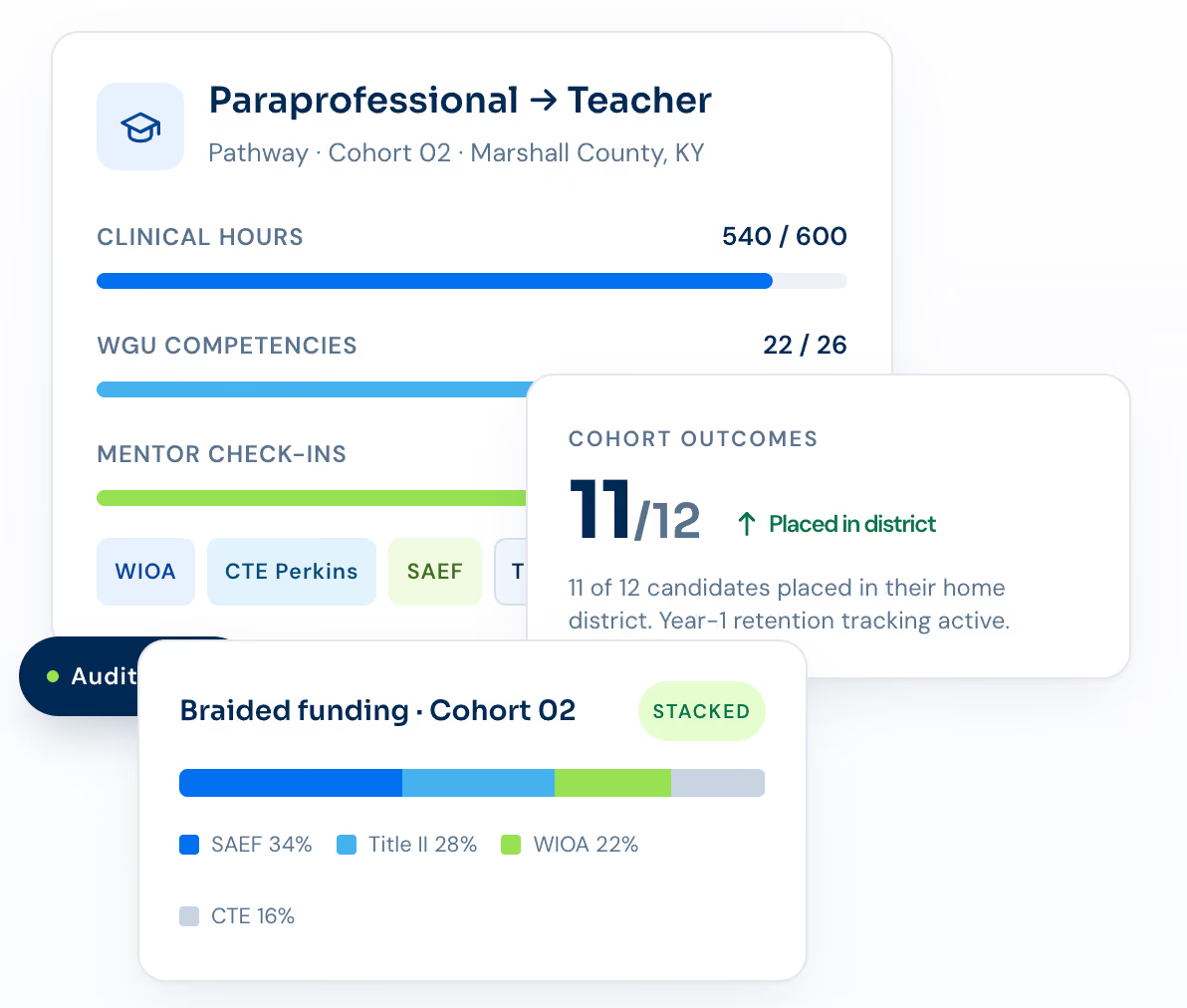
CTE, WIOA, SAEF, and Title II, layered with state GYO dollars and philanthropic funds where they exist. The dollars stay braided — and the next grant cycle is easier than the last one.
Bring your own academic partner, or start with WGU's School of Education. Either way, roles, coursework, clinical structure, and competencies are defined on day one, paired with a pre-built implementation kit.
Apprenticeship documentation that meets registered-apprenticeship standards. Candidate progress, clinical hours, mentor check-ins, milestones, and measurable skill gains — without your HR team operating the back office.
State, federal, and intermediary reporting in one place. MSG exports, completion rollups, and partner-ready dashboards that hold up under audit and renewal — and make the next legislative cycle a layup.
Most teacher preparation programs already have the coursework, the clinical model, and the accreditation. What they lack is the apprenticeship layer: braided funding, on-the-job hour tracking, mentor sign-offs, and the reporting the state and CAEP accept. Craft supplies that layer under your program, and apprenticeship strengthens your case on CAEP R1, R2, R3, and R5 rather than complicating it. For districts without a prep partner, WGU brings a nationally scaled, competency-based university with the largest US teacher preparation footprint. Either way, it is one conversation, not five.
Pathways available through WGU when you need a partner:


Create pathways for people already rooted in the community — paraprofessionals, classified staff, instructional aides, career changers, and candidates already enrolled in your program who want to teach where they live.
Districts, colleges, and prep programs all have access to funding streams, but the dollars are hard to braid and sustain. We align workforce, education, apprenticeship, and grant reporting so programs are easier to fund and easier to renew.
We package the program structure, documentation, reporting workflows, and partner coordination needed to launch and manage pathways — without your HR team or your faculty building it all in-house.
Data infrastructure for candidate progress, clinical experience, competencies, milestones, completions, and retention outcomes — in one place, ready for state, federal, and intermediary reporting.
Boards, legislators, and communities need to see what changed. We turn program activity into clear evidence: who entered, who progressed, who certified, who placed — and who stayed.
Every new pathway should land on a kit, not a one-off lift for your HR director or department chair. That's the bar we hold ourselves to.
Start where your vacancy hurt is worst — usually SPED, secondary STEM, or elementary. Most programs begin with one or two licensure areas and expand as the retention story compounds.

A superintendent or dean could, in theory, braid SAEF, Title II, WIOA, and CTE on their own. In practice, they cannot. We align the streams, document the use of funds, and produce the reporting each one demands — so the dollars you braid this year stay braided next year. Where the pathway runs through a Title IV institution, Workforce Pell joins the stack.
You can't fake that kind of experience. The only way to get it is to live it.— Gina Zuberbier, Program Director, Talent Together (Michigan)
Tell us about your hardest-to-fill licensure area and the candidates you already have — paras and classified staff on payroll, or students already in your program. We'll come back with a draft pathway, a funding map, and what the first 90 days look like.