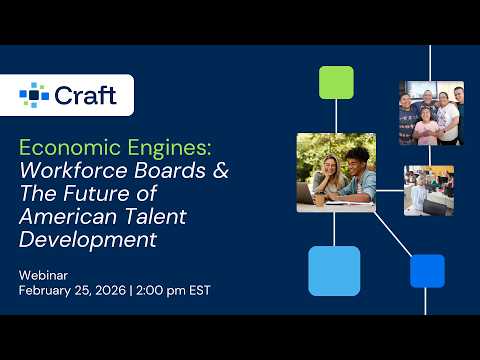
Economic Engines: WDBs & the Future of American Talent Development
What workforce boards actually do, why they get blamed for the wrong things, and what separates the boards that will thrive over the next five years from the ones that will struggle.
What's inside
A panel on the gap between what workforce boards are measured on and what they actually deliver, and what modernization looks like when you start with mindset rather than software.
- The measurement problem. Boards get blamed for not training enough people while the wraparound work that makes training stick, confidence building, childcare, transportation, resume help, goes uncounted. The argument here is to judge boards on real community activity and employer relevance instead.
- Fix the front door first. Modernization starts with intake at the job center, the website, and how hard it is for an employer to reach a human. Workers and businesses have to be able to find help fast before any platform matters.
- What employers actually need. Simplified asks, dedicated employer-facing staff, co-designed programs, shared metrics, and follow-through over time. Low friction and business driven, or it does not hold.
- Where technology helps and where it does not. Integrated case management, automated text communication, and labor market and skills data earn their keep. Silver bullet platforms and full self-service do not. Start with the problem, keep the human connection, and protect the lowercase-d democratic mandate.
- What thriving boards do differently. They shift from managing WIOA programs to architecting regional systems, move from bean counting to outcomes, diversify funding through 501c3s and TANF or SNAP, and modernize their eligible training provider lists.
Numbers worth carrying into a board conversation
- The federal ETA budget fell from $14 billion in 2009 to under $8 billion today. Jane Oates on that decline: "That's an error. That's a mistake."
- JFF's north star: 75 million people in quality jobs by 2033.
- Dallas recruited nail technicians into hospital sterilization tech roles during COVID, which stands as the session's example of what out of the box regional problem solving looks like in practice.
Closes with audience Q&A on partnerships, policy levers, and technology.
Who it's for
Workforce development board directors and staff, WIOA administrators, regional workforce and economic development leaders, and the employer partners trying to work with them.
Get this resource
Fill this in once and the file opens right away.
We'll email you about new resources. Unsubscribe any time.
Next live session
Register NowWatch on demand
Drop your work email and the recording opens in a new tab.
We'll email you about new resources. Unsubscribe any time.
Get this resource
Drop your work email and the PDF opens right away.
We'll email you about new resources. Unsubscribe any time.